Table of Contents
For many people with chronic lung conditions, airway clearance becomes a part of everyday life. Conditions like bronchiectasis and COPD mean mucus is building up in the lungs, making it harder to breathe easier. One way to help clear mucus buildup and improve lung function is with chest physiotherapy techniques.
What is Chest Physiotherapy?
Chest physiotherapy, or chest physical therapy (CPT), is designed to help loosen mucus in the lungs so it can be expelled.1 Clearing mucus helps reduce the risk of infection, improve breathing, and slow the progression of disease.2
Healthcare providers may recommend this approach for those who’ve been diagnosed with:
- Cystic fibrosis
- Chronic bronchitis
- Bronchiectasis
- Pneumonia
- Neuromuscular disorders that affect the ability to cough
- Primary Ciliary Dyskinesia (PCD)
Chest Physiotherapy Techniques
1. Manual Chest Physiotherapy
A caregiver, trained family member, or respiratory therapist uses their hands to perform percussion chest physiotherapy. Rhythmic clapping on the chest and back helps loosen mucus, while vibration or shaking movements can help mobilize secretions.
2. Postural Drainage
Postural drainage involves sitting or lying in various positions (i.e., on the side, stomach, or back) to allow gravity to help drain mucus from the lungs.
Using chest percussion with vibrations and postural drainage can help break up mucus, making it easier to move mucus upward and expel it from your airways.3
3. Chest Physiotherapy Vest
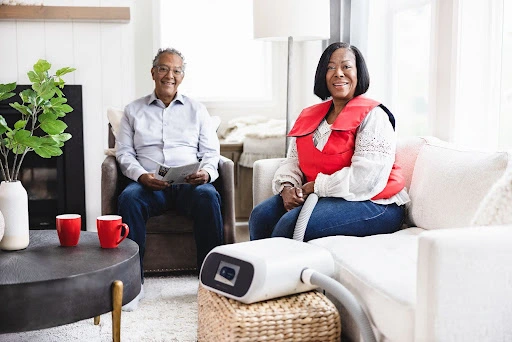
Also known as an airway clearance system, this machine creates gentle oscillations that help break up mucus, making it easier to cough out.
4. Chest Physiotherapy Machine Devices
Other chest physiotherapy machines use positive expiratory pressure (PEP) or vibration to support at-home airway clearance.
Vests and machines are also referred to as mechanical chest physiotherapy.
Chest Physiotherapy Steps (Manual)
Exact chest physiotherapy steps depend on the technique used, but a typical manual CPT session might include:
- Positioning. Sit or lie in a posture that promotes mucus drainage.
- Percussion. While lying in various positions, a trained caregiver or respiratory therapist will manually clap on a person’s chest wall, cupping the hand to help soften the impact:
“Clapping (percussion) by the caregiver on the chest wall over the part of the lung to be drained helps move the mucus into the larger airways.”1
- Postural Drainage. Postural drainage is often combined with chest wall percussion. Sitting or lying down in various positions helps gravity move the mucus up and out.
- Vibration. After a series of percussion is completed, the caregiver will use a steady hand to create a shaking motion, helping to form vibrations in the lungs.
- Productive Coughing. The patient expels loosened mucus through coughing.
How Often Is Manual CPT Performed? Each person is different, so frequency and duration vary. On average, each process takes 20-40 minutes to complete, 1-4 times a day; however, frequency will be prescribed by your clinician.
Using an HFCWO Airway Clearance System (SmartVest)
Unlike manual chest physiotherapy techniques, HFCWO systems such as SmartVest deliver automated oscillatory air pulses designed to promote airway clearance. A typical SmartVest therapy session may include the following steps:
- Put on Your Vest. Fit the vest so it’s comfortably snug around the shoulders and chest, without restricting your breathing. You can adjust the shoulder straps and D-ring strap so your vest is nice and secure. Wear a single layer underneath, usually a t-shirt.
- Connect the Hose. Put the hose connector into the generator, then into the garment, and give it a slight twist to secure the connection. Both connection points are the same, so don’t worry about distinguishing between them. Make sure both sides are sealed properly.
- Power the Generator. Connect the power cord to an electrical outlet. Use the control panel to access your therapy program.
- Press Play. Once you press play on your therapy program, your vest will begin the air pulses, gently squeezing and releasing the chest wall, making it easier to clear mucus from the lungs.
- Cough Out the Mucus. Your program will have built-in pauses for huff coughing. You’ll hear a beep, followed by a timer counting down. Use this time to perform a “huff cough” to expel that loosened mucus.
How do you perform a huff cough? Imagine how you’d breathe on a pair of eyeglasses to clean them. Inhale deeply through the nose. Then, while pulling in the abdomen area, force the air out through the mouth in three equal breaths, making a “huff” sound in the back of the throat. Repeat 2-3 times during and after your airway clearance session.4
How to Use Your SmartVest at Home
Chest PT at Home
With proper training from a respiratory therapist, caregivers can learn manual techniques to perform chest PT at home. Alternatively, devices such as a chest physiotherapy vest allow patients to manage their treatment independently.
Tips for home airway clearance include:
- Follow the schedule recommended by your healthcare provider.
- Stay consistent, even on days you feel okay.
- Use chest PT with any prescribed medications to maximize effectiveness.
Manual Chest Physiotherapy vs. HFCWO Airway Clearance
Manual chest physiotherapy involves caregiver-applied percussion and positioning, while HFCWO airway clearance systems, such as SmartVest, deliver automated oscillatory therapy to the chest wall.
Manual CPT vs. SmartVest
| Feature | Manual CPT | SmartVest |
| Independence | Requires a caregiver or trained therapist to perform for full 360° chest coverage. | May be used independently by some patients, as determined by their healthcare provider. |
| Consistency | Effectiveness depends on the caregiver’s technique, strength, and timing. | Provides consistent, repeatable therapy sessions every time. |
| Time Commitment | Typically 20-40 minutes, 1-4 times a day | Commonly prescribed 15-30 minutes, 2x times a day (recommended morning and evening) |
| Coverage of Lungs | Depends on positioning and caregiver knowledge. | Each compression treats all lobes of the lungs simultaneously. |
| Ease of Use | Requires a trained caregiver | Simple machine use, training provided. SmartVest users can safely and easily administer each therapy session by using a preset program on their generator. |
| Comfort | Uncomfortable for some because of the force of the clapping and switching of positions. | On average, SmartVest releases 91% of its air between compressions, creating more Breathing Room™ for patients.5 |
| Portability | Nothing to carry, but a trained caregiver is required | Portable device light enough to travel with. |
| Interruption to life | Lying down in various positions means you’ll need to set aside specific times during the day. | SmartVest delivers 360° chest coverage simultaneously. Perform therapy while watching TV, hanging out with grandchildren, or playing a board game. |
Your doctor or respiratory therapist can help determine which method is right for you.
Proven Results with SmartVest
In published retrospective analyses evaluating the use of HFCWO therapy in specific patient populations, SmartVest has been associated with the following outcomes:
- Decrease in hospitalizations, pneumonia, cough, and medication usage.
- Reduction in Healthcare Resource Utilization (HCRU), including having fewer chest x-rays, computerized tomography (CT) scans, and lung function tests.
Consistently, findings from a previous 2019 first-of-its-kind, peer-reviewed study and published in BMC Pulmonary Medicine, found that when the SmartVest Airway Clearance System was utilized in an algorithm of care treatment plan, it helped patients:
- Reduce bronchiectasis-related exacerbations requiring hospitalization
- Decrease antibiotic usage
- Improve lung stability6
Both studies reveal the long-term benefits of incorporating HFCWO therapy into your ongoing treatment plan.
Choosing Your Right Airway Clearance Therapy
If you’re living with a chronic lung condition, breathing without feeling constricted is something you never want to take for granted.
Although your clinician may prescribe different treatments to help manage your symptoms, airway clearance helps address mucus buildup, which is the underlying cause of your chronic symptoms. Talk to your doctor about which airway clearance technique is right for you, your condition, and your lifestyle.
To learn more about how SmartVest can support your airway clearance routine, request an informational packet. You’ll get more information on how our approach works and why it’s been trusted for 30+ years.
Resources
- Cystic Fibrosis Foundation. “Chest Physical Therapy.”
- National Library of Medicine. (2021) “A review of physiotherapy practice for people with bronchiectasis.”
- National Library of Medicine. (2024) “Postural Drainage and Vibration.”
- American Thoracic Society. “Treating Bronchiectasis.”
- Pokorney J. Comparison of Oscillatory Trough Pressure Generated by High Frequency Chest Wall Oscillation (HFCWO) Systems: A White Paper.
- Powner, J, et al. Employment of Algorithms of Care Including Chest Physiotherapy Results in Reduced Hospitalizations and Stability of Lung Function in Bronchiectasis. BMC Pulmonary Medicine, BioMed Central. 25 Apr. 2019.