Table of Contents
If you or a loved one has a chronic lung condition, like bronchiectasis or COPD, you may have heard of High-Frequency Chest Wall Oscillation (HFCWO) therapy. As you explore treatment options, you may encounter a lot of information and misinformation online. In fact, we often get questions about HFCWO therapy and potential SmartVest side effects.
As the number of patients newly diagnosed with bronchiectasis increases, common misconceptions may prevent you from choosing the most effective approach to managing chronic symptoms and finding relief.
Let’s address some common misconceptions and HFCWO therapy facts so you can make informed decisions about your respiratory health.
Airway Clearance Therapy Misconceptions
Myth: HFCWO Therapy Is Only for Cystic Fibrosis (CF) Patients
Reality: HFCWO can help with a variety of chronic lung conditions.
While HFCWO therapy was initially developed for individuals with Cystic Fibrosis, its benefits extend far beyond this population.
Today, HFCWO therapy is a widely recognized and effective treatment for conditions that lead to excessive mucus production and impaired airway clearance, such as bronchiectasis. This is a chronic condition in which the airways become damaged and widened, leading to mucus buildup and recurrent infections.
Myth: HFCWO Therapy is Uncomfortable or Painful
Reality: Low oscillation pressure makes SmartVest a comfortable option for HFCWO therapy.
SmartVest is designed to be comfortable during your therapy. However, for some, unusual sensations are possible, especially as you get used to the oscillation.
In a third-party study, three HFCWO therapy vests were compared to assess their variability in oscillatory trough pressure, the constant “squeezing pressure” applied to the chest during treatment.¹ The study found that the SmartVest consistently delivered lower oscillatory trough pressure than the other two respiratory vests evaluated. This may provide a more comfortable HFCWO treatment by eliminating unnecessary, constant “squeezing pressure” against the chest.
Most wearers find it comfortable, citing gentle, rhythmic compression and release with adjustable intensity. While some may experience a tickling sensation, it shouldn’t be painful. Many users find it a relaxing part of their daily routine. Here are a few possibilities to note:
- You’ll feel a mild vibration that may take time to get used to, especially when first starting.
- If the vest is too loose or too tight, or the settings are too aggressive, discomfort can increase. Our team can help ensure your vest is the right size!
- If the garment does not fully inflate or the bladder is not positioned correctly, breathing may become even more difficult. If this happens, our support team is here to help determine the issue and ensure the device is working properly.
If you experience significant pain, shortness of breath, or distress, pause your airway clearance therapy and talk to your healthcare provider.
Myth: HFCWO Vests are Awkward to Use
Reality: SmartVest has programmable settings and a simple, user-friendly design.
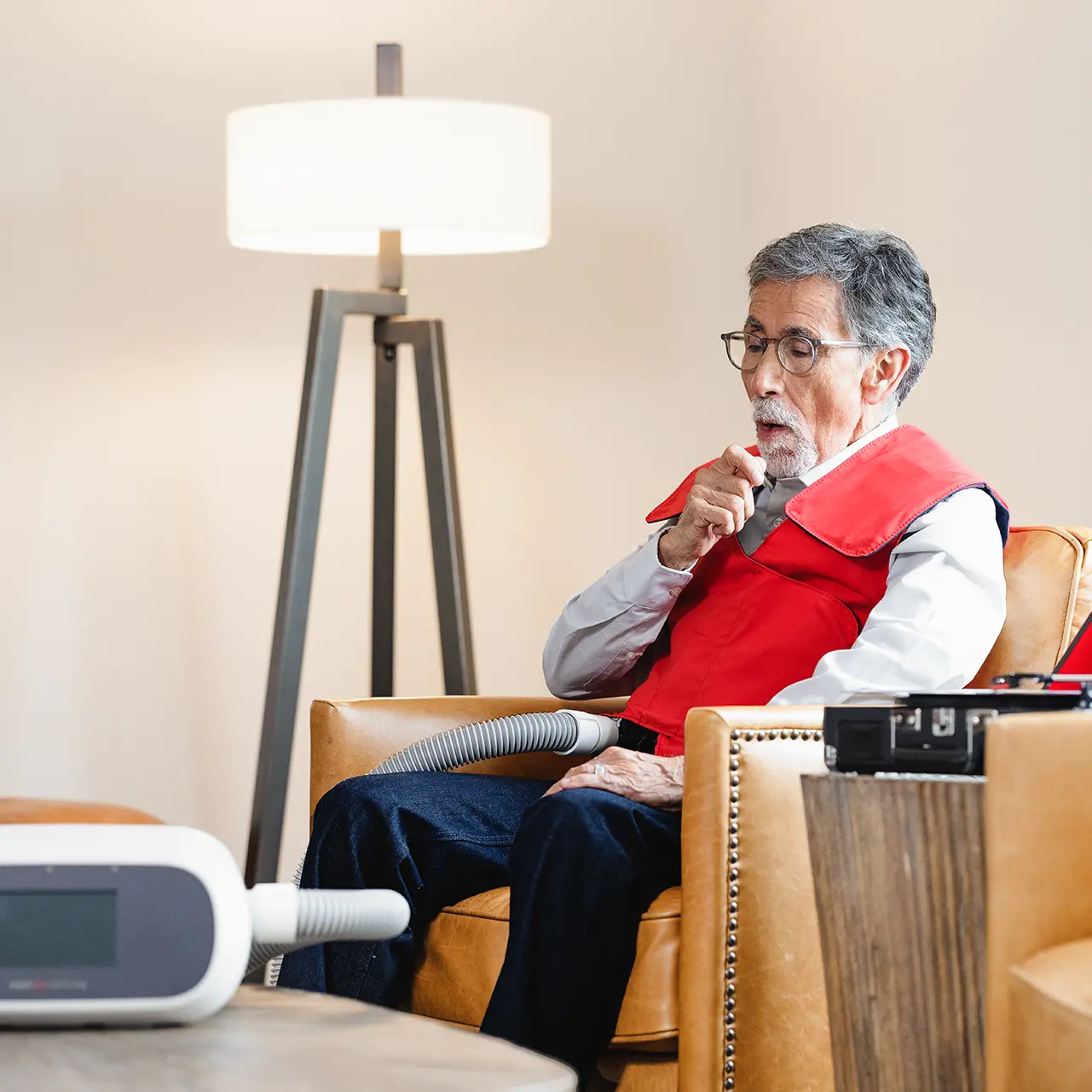
SmartVest fits securely around the chest and offers easy adjustments, so you don’t feel constricted. Made from soft-touch microfiber with a single-hose design, SmartVest features a unique, proprietary “active inflate – active deflate” design that enables deep, easy breaths during treatment. You can also preset therapy protocols, providing a one-touch start for consistent therapy.
Read SmartVest Frequently Asked Questions.
Myth: HFCWO Therapy is Time-Consuming
Reality: The average therapy session lasts only 15 minutes.
On average, HFCWO therapy is performed 2 times per day, 7 days a week, for approximately 15 minutes per session, per the prescriber’s instructions. Like brushing your teeth, SmartVest fits seamlessly into a patient’s daily routine, ensuring an uninterrupted day.

Patients can easily complete each session while traveling or at home, allowing them to perform airway clearance on their own schedule. Compared with perceived mobile technologies that weigh up to 13 pounds, the simple-to-use, lightweight SmartVest garment is designed to be used independently when possible.
Myth: HFCWO Therapy Is Expensive
Reality: SmartVest is covered by nearly all insurance providers.
SmartVest is covered by:
- Most private insurance
- Medicare
- State medical assistance
- A combination of all three
- U.S. Department of Veterans Affairs.
Additionally, patients prescribed a SmartVest may be eligible for Electromed’s financial assistance programs to help alleviate financial barriers to receiving the airway clearance device. SmartVest has also been clinically proven to reduce hospitalization and drug costs for bronchiectasis patients.²
Learn more about insurance coverage and reimbursement guidelines.
Myth: Manual Chest PT Is Always a More Effective Airway Clearance Method
Reality: Different individuals benefit from different airway clearance techniques.
Chest Physiotherapy has been a long-standing method for airway clearance. While effective for some, it has limitations that HFCWO therapy addresses.
- Dependency on a Caregiver. CPT requires another person to administer the treatment, which can be inconvenient and limit independence.
- Consistency. Effectiveness can vary depending on the caregiver’s expertise, technique, and consistency.
- Time-Consuming. It can be a lengthy process.
HFCWO therapy offers significant advantages in these areas:
- Independence. Many patients can administer their own treatment at any time, anywhere.
- Consistency. SmartVest system delivers consistent, targeted therapy every time.
- Efficiency. Therapy sessions are typically 15 minutes long, two times a day, and can be easily integrated into daily routines.
While CPT can be beneficial for some, HFCWO therapy often provides a more consistent and efficient alternative for many.

Myth: HFCWO Is a “Do-Nothing” Passive Treatment
Reality: SmartVest actively helps clear airways.
SmartVest delivers rapid, gentle air pulses that inflate and deflate the vest, creating oscillations against the chest wall. These oscillations create a “mini-cough” inside your lungs, loosening and thinning mucus. This process helps move mucus upward, making it easier to cough out.
Myth: Respiratory Medication Replaces the Need for HFCWO Therapy
Reality: HFCWO works alongside other prescribed treatments for a comprehensive approach.
The role of medication is another common airway clearance therapy misconception. HFCWO therapy is an adjunctive therapy, meaning it works in conjunction with other treatments, not as a replacement for them.
It’s designed to enhance the effectiveness of your overall treatment plan, which can include prescribed respiratory medications, such as DPP1 inhibitors. Your healthcare provider will determine the best combination of therapies for your specific condition.
Myth: All HFCWO Therapy Vests Perform the Same
Reality: SmartVest has been clinically proven to relieve bronchiectasis-related symptoms.
As HFCWO therapy gains traction as a bronchiectasis treatment, it’s not uncommon for patients and even prescribers to think that all respiratory vests are designed equally. However, SmartVest has multiple published outcome studies supporting its effectiveness in treating and relieving bronchiectasis-related symptoms.
SmartVest is clinically proven to help clear excess mucus from the lungs, reducing the risk of respiratory infections and hospitalizations.
A longitudinal, outcome-based study demonstrated a reduction in bronchiectasis-related exacerbations following long-term (2.5-year) use of SmartVest. Patients experienced a:
- 59% decrease in hospitalizations³
A separate study found
- 57% decrease in antibiotic use
- 75% decrease in hospital visits for severe exacerbations when compared to prior treatment.⁴
SmartVest Side Effects: What to Expect
HFCWO therapy is generally well tolerated, with most people experiencing no significant adverse effects. However, as with any medical device, some individuals might experience minor, temporary sensations:
- Mild chest discomfort or tickling. This usually resolves as you get used to the therapy. Adjusting the intensity often helps.
- Difficulty breathing or lightheadedness. If vest settings are too high, the vest is too tight or improperly fitted, or the pressure on the chest wall is too high, it can be difficult to take deep breaths, particularly as mucus is mobilized. Take breaks as needed and make sure you’re coughing effectively. Always follow your doctor’s guidelines, which are designed to be tailored to your needs.
Need specific assistance? Our Respiratory Therapists are here to help you or a loved one in the event of these symptoms - Skin irritation. Rarely, if the vest is too tight or if there’s prolonged contact in one area, mild skin irritation might occur. Our team can help make sure your vest fits you correctly.
There can also be a worsening of the underlying condition if therapy is too aggressive. It’s important to discuss any concerns or unusual sensations with your doctor or respiratory therapist. They can help adjust your therapy settings or offer guidance.
Your Health, Your Choice, Backed by Facts
 Navigating medical treatments for chronic lung conditions can be complex, especially given the abundance of information available online. Hopefully, this breakdown of common airway clearance therapy misconceptions has been insightful.
SmartVest is designed to empower you with an effective, comfortable way to manage your respiratory condition and improve your quality of life.
Request an informational packet to learn more about SmartVest and whether it’s the right fit for you.

Resources:
- Electromed (n.d.). Comparison of oscillatory trough pressures generated by high frequency chest wall oscillation (HFCWO) systems: A White Paper
- SmartVest. Cost-Effective Analysis of HFCWO for Patients with Non-CF Bronchiectasis
- Sievert CE, et al. 2016. Using High Frequency Chest Wall Oscillation in a Bronchiectasis Patient Population: An Outcomes-Based Case Review. Respiratory Therapy, 11(4), 34-38
- Sievert C et al. Respiratory Therapy, Vol. 11 No 4, 34-38, 2016.